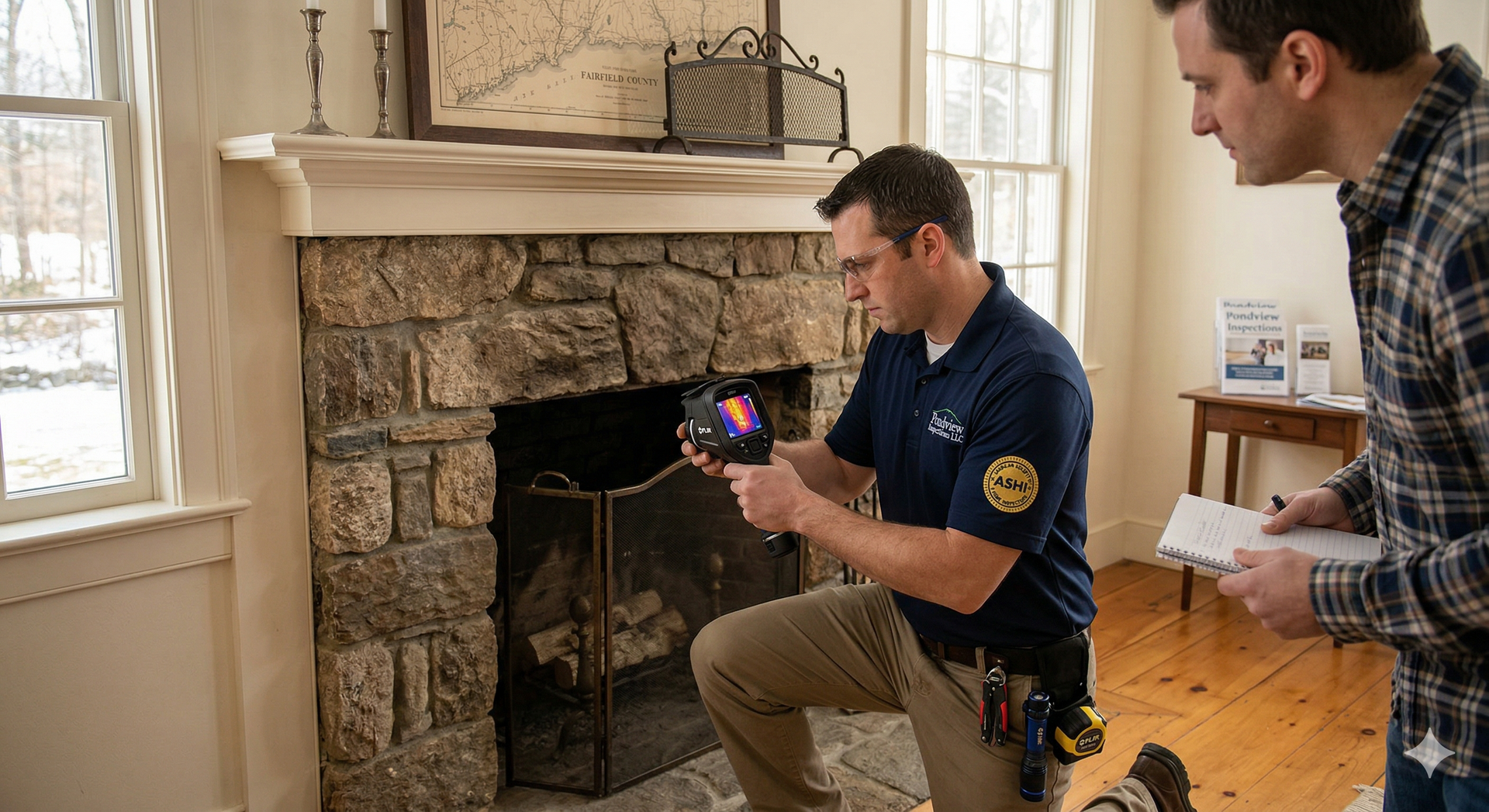
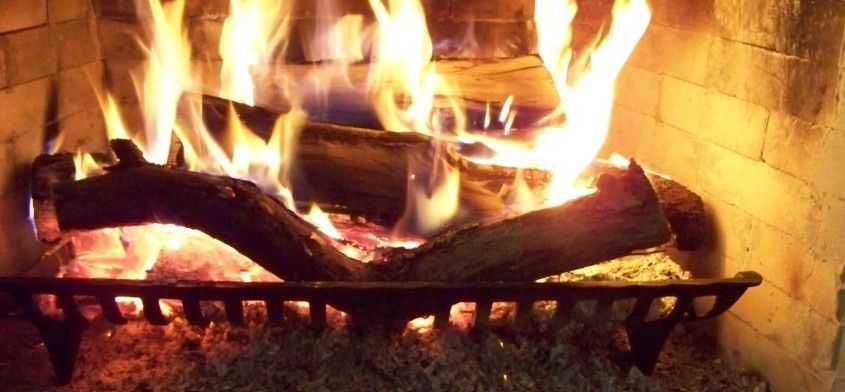
.There is nothing quite like a glowing fire on a chilly Sandy Hook night. In New England, the fireplace isn't just a luxury; it’s a staple of our local architecture. However, because we often go months without using them, fireplaces frequently hide safety hazards that only come to light once the first match is struck.
At Pondview Inspections, part of my
"I Teach House" philosophy is ensuring you understand the "silent" systems of your home. Before you light that first fire this season, here are five commonly overlooked fireplace issues I find during local inspections—and why they matter for your family’s safety.
1. The "Too-Short" Chimney (Drafting Dangers)
Many of the charming homes in
Southbury or
Woodbury have undergone roof renovations over the decades. Sometimes, additions or new roof lines leave the chimney too short to function safely.
- The Technical Rule: Per the International Residential Code (IRC), a chimney must extend 3 feet above the roof on its shortest side and be 2 feet higher than any part of the building within 10 feet.
- The Risk: If it’s too short, it won't draft properly, increasing the risk of hot embers landing on your shingles or, worse, a chimney fire that spreads to the structure.
2. Combustible Clearances (The 6-Inch Rule)
I often see beautiful custom mantels in
Westport and
Wilton homes that are actually fire hazards. Building materials and decorative woodwork must be kept a safe distance from the flames.
- The Inspector’s Insight: No combustible material (like that wood-carved mantel) should be within 6 inches of the fireplace opening. During an inspection, I look for "heat shadowing" or charring that suggests your décor is getting dangerously hot.
3. Hidden Gaps: The "Secondary Chimney" Effect
In many masonry fireplaces, the "face" (the part you see in your living room) is built separately from the actual firebox. Over time, or due to poor construction, gaps can open up between the two.
- Why it’s dangerous: These gaps can act like a "secondary chimney," drawing heat and sparks into the hidden wall cavities of your home where you can't see them. I use specialized lighting to check for these openings to ensure the heat stays where it belongs: in the flue.
4. Smoke "Roll Out" and Staining
Have you noticed dark soot stains on the face of your fireplace or the underside of your mantel? This is called "smoke roll out," and it’s a sign of inadequate drafting.
- Pro Tip: In our area, cold air can get "trapped" in the flue. Before lighting a full fire, hold a piece of lit newspaper under the open damper. This warms the air column and starts the upward draft, preventing a living room full of smoke. If it still rolls out, you may have a blockage or an incorrectly sized log grate.
5. Undersized Hearth Extensions
The hearth—the non-combustible floor area in front of the fireplace—is designed to catch rolling logs and stray sparks.
- Local Finding: In many
Newtown renovations, I find that new hardwood floors have been installed too close to the firebox. Most hearths need a minimum 16-inch extension. If you’ve added a fireplace insert (common for energy efficiency), that extension often needs to be even larger.
The Bottom Line: "Filter Out the Fear" with an Annual Check
While I check these components during your home inspection, a fireplace is a dynamic system. I always recommend that my clients have their chimneys evaluated annually by a
CSIA-certified chimney sweep, especially if you use the fireplace as a primary heat source in the winter.
Buying a home with a fireplace should be a dream, not a safety concern. My goal is to give you the technical knowledge to enjoy that New England lifestyle safely.
Buying or selling a home in Fairfield County? Let’s make sure your home’s systems are working for you.
Book Your Inspection Online 24/7 or call Jason at
(203) 304-9140.